Kathmandu Birding Day: Phulchowki & Godawari
Kathmandu's best birding mountain in a single day: forested slopes at dawn, Godawari garden at midday.
1 day, up to 2,782 m, and 83 birds recorded on this route.
Best months: February to April and October to November.
 Video

 Video
1 / 5
One full day on Phulchowki, the forested mountain on the rim of the Kathmandu Valley, and in the Godawari gardens below it. From oak and rhododendron forest up to the summit at 2,782 m: laughingthrushes, sunbirds, forktails at the temple stream and Nepal's only endemic bird, the Spiny Babbler. Easy walking, and ideal before or after a trek.
Birds to look for
None of them is promised: wild birds keep their own plans.
★ seen with guests on this trip
Kalij Pheasant (seen with guests on this trip)
Lophura leucomelanos
Lower Phulchowki Forest · 1,750 m · sometimes seen
“Slate and silver with a scarlet face, scratching quietly along the trail edge.”
Spiny Babbler
Turdoides nipalensis
Lower Phulchowki Forest · 1,750 m · sometimes seen
“Singing from the scrub on the lower slopes”
Hill Partridge
Arborophila torqueola
Upper Oak–Rhododendron Forest · 2,500 m · sometimes seen
“Shy and chestnut-capped, whistling from the mossy forest floor at dawn.”
Scarlet Minivet (seen with guests on this trip)
Pericrocotus speciosus
National Botanical Garden, Godawari · 1,500 m · usually seen
“Red-and-black flocks flickering through the treetops like sparks.”
Great Barbet (seen with guests on this trip)
Psilopogon virens
Lower Phulchowki Forest · 1,750 m · almost always seen
“Its loud pi-ooo call is the sound of the Himalayan forest.”
Himalayan Bulbul (seen with guests on this trip)
Pycnonotus leucogenys
National Botanical Garden, Godawari · 1,500 m · almost always seen
“A cheerful crest and a white cheek, singing from every village bush.”
Rufous-bellied Niltava (seen with guests on this trip)
Niltava sundara
Phulchowki Mai Temple · 2,100 m · almost always seen
“A rich orange and glittering blue, bright as a lantern in the forest.”
Spotted Forktail (seen with guests on this trip)
Enicurus maculatus
Phulchowki Mai Temple · 2,100 m · almost always seen
“Black, white and elegant on the rushing streams.”
Himalayan Cutia
Cutia nipalensis
Lower Phulchowki Forest · 1,750 m · sometimes seen
“A beautifully barred and chestnut forest bird that creeps along mossy branches.”
Eurasian Jay
Garrulus glandarius
National Botanical Garden, Godawari · 1,500 m · usually seen
“Pinkish, noisy and forever busy among the oaks.”
Mountain Hawk-Eagle
Nisaetus nipalensis
Lower Phulchowki Forest · 1,750 m · sometimes seen
“A crested forest eagle whose ringing call carries across whole valleys.”
Besra
Tachyspiza virgata
Lower Phulchowki Forest · 1,750 m · sometimes seen
“A small, fierce forest hawk that dashes between the oaks, and is gone before you can say its name.”
Black Eagle (seen with guests on this trip)
Ictinaetus malaiensis
Phulchowki Summit · 2,782 m · usually seen
“Glides slowly just above the canopy on long, finger-tipped wings.”
All 83 birds on this routeand 10 other animals and plants
Birds 83
- Ashy Wood-Pigeon
- Bar-tailed Treecreeper
- Besra
- Black Bulbul
- Black Eagle (seen with guests on this trip)
- Black-throated Bushtit (seen with guests on this trip)
- Black-throated Sunbird
- Blue Whistling-Thrush (seen with guests on this trip)
- Blue-fronted Redstart
- Blue-throated Barbet
- Blue-winged Minla (seen with guests on this trip)
- Chestnut-bellied Rock-Thrush
- Chestnut-crowned Laughingthrush (seen with guests on this trip)
- Chestnut-tailed Minla
- Collared Grosbeak
- Collared Owlet
- Common Kingfisher
- Egyptian Vulture
- Eurasian Jay
- Fire-tailed Sunbird (seen with guests on this trip)
- Fulvous-breasted Woodpecker
- Golden Bush-Robin
- Golden-breasted Fulvetta
- Golden-throated Barbet
- Great Barbet (seen with guests on this trip)
- Great Parrotbill
- Greater Yellownape
- Green-backed Tit (seen with guests on this trip)
- Green-tailed Sunbird (seen with guests on this trip)
- Grey-capped Pygmy Woodpecker
- Grey-chinned Minivet
- Grey-crested Tit
- Grey-hooded Warbler (seen with guests on this trip)
- Grey-winged Blackbird (seen with guests on this trip)
- Hill Partridge
- Himalayan Bluetail (seen with guests on this trip)
- Himalayan Bulbul (seen with guests on this trip)
- Himalayan Cutia
- Himalayan Griffon (seen with guests on this trip)
- Hoary-throated Barwing (seen with guests on this trip)
- Hodgson's Redstart
- Kalij Pheasant (seen with guests on this trip)
- Koklass Pheasant
- Large Niltava (seen with guests on this trip)
- Little Forktail (seen with guests on this trip)
- Little Pied Flycatcher
- Long-tailed Minivet (seen with guests on this trip)
- Mountain Bulbul
- Mountain Hawk-Eagle
- Mrs. Gould's Sunbird (seen with guests on this trip)
- Nepal Fulvetta
- Oriental Honey-buzzard
- Oriental Magpie-Robin
- Oriental White-eye (seen with guests on this trip)
- Plumbeous Water Redstart (seen with guests on this trip)
- Red-billed Blue Magpie (seen with guests on this trip)
- Red-headed Trogon
- Red-vented Bulbul
- Rufous Sibia (seen with guests on this trip)
- Rufous-bellied Niltava (seen with guests on this trip)
- Rufous-chinned Laughingthrush
- Rufous-gorgeted Flycatcher
- Rufous-vented Tit (seen with guests on this trip)
- Rufous-winged Fulvetta
- Scarlet Minivet (seen with guests on this trip)
- Slaty-blue Flycatcher
- Speckled Wood-Pigeon
- Spiny Babbler
- Spot-winged Tit
- Spotted Forktail (seen with guests on this trip)
- Spotted Laughingthrush
- Spotted Nutcracker (seen with guests on this trip)
- Streaked Laughingthrush (seen with guests on this trip)
- Striated Laughingthrush (seen with guests on this trip)
- Stripe-throated Yuhina
- Ultramarine Flycatcher
- Verditer Flycatcher (seen with guests on this trip)
- Whiskered Yuhina (seen with guests on this trip)
- White-capped Redstart (seen with guests on this trip)
- White-throated Laughingthrush (seen with guests on this trip)
- Yellow-bellied Fantail (seen with guests on this trip)
- Yellow-billed Blue Magpie
- Yellow-browed Tit
Mammals 3
- Assamese Macaque (seen with guests on this trip)
- Barking Deer (seen with guests on this trip)
- Yellow-throated Marten
Butterflies 3
- Common Mormon (seen with guests on this trip)
- Krishna Peacock
- Northern Jungle Queen
Plants 4
- Bearded Rhododendron (seen with guests on this trip)
- Himalayan Daphne
- Necklace Orchid
- Tree Rhododendron (seen with guests on this trip)
With guests
March 2026, Phulchowki Mai TempleLunch with a forktail
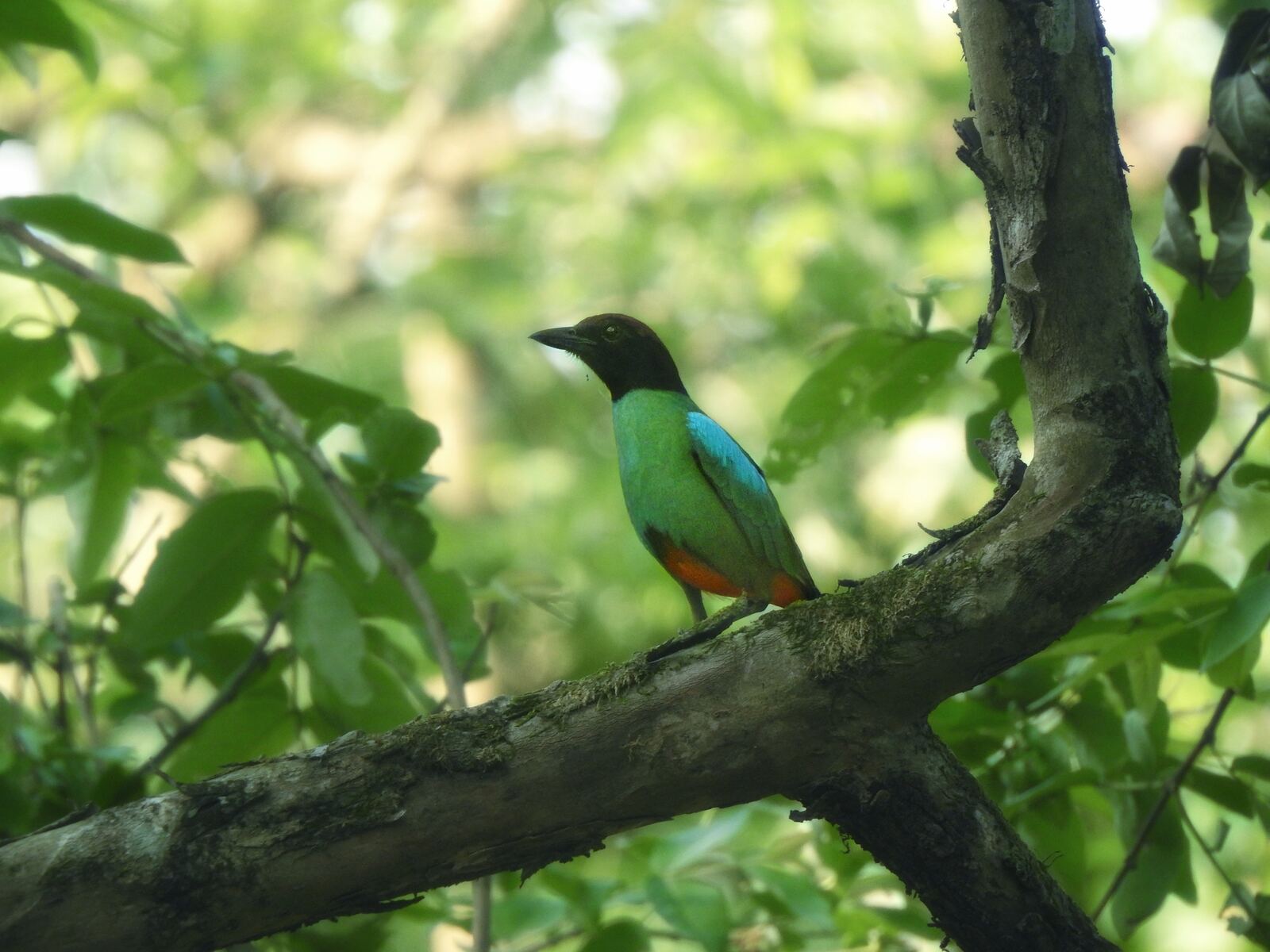
Spotted Forktail
Enicurus maculatus
Phulchowki Mai Temple · 2,100 m · MAR 2026
“foraging at stream edge, 11:40”
with Placeholder Guest E and partner, United States
We stopped at the Mai temple for lunch, unwrapped our sandwiches on the stone steps and, as always, I told my guests to keep their eyes on the stream. Within five minutes a Spotted Forktail was bobbing along the wet rocks a few metres from our feet, its long black-and-white tail swinging.
A Rufous-bellied Niltava flicked in above us, and a White-capped Redstart appeared on a boulder in mid-stream. Nobody finished their sandwich for a good while. That is a perfect Phulchowki lunch.
Seen that day: Spotted Forktail, Little Forktail, White-capped Redstart, Rufous-bellied Niltava, Large Niltava
“After a few days of temples and traffic, a day on Phulchowki was exactly what we needed. Krishna found Mrs. Gould's Sunbird feeding in a rhododendron and a Spotted Forktail at the stream. We saw so many birds in a single day. Placeholder review.”
Placeholder Guest E, United States November 2025, Phulchowki SummitA clear day in November
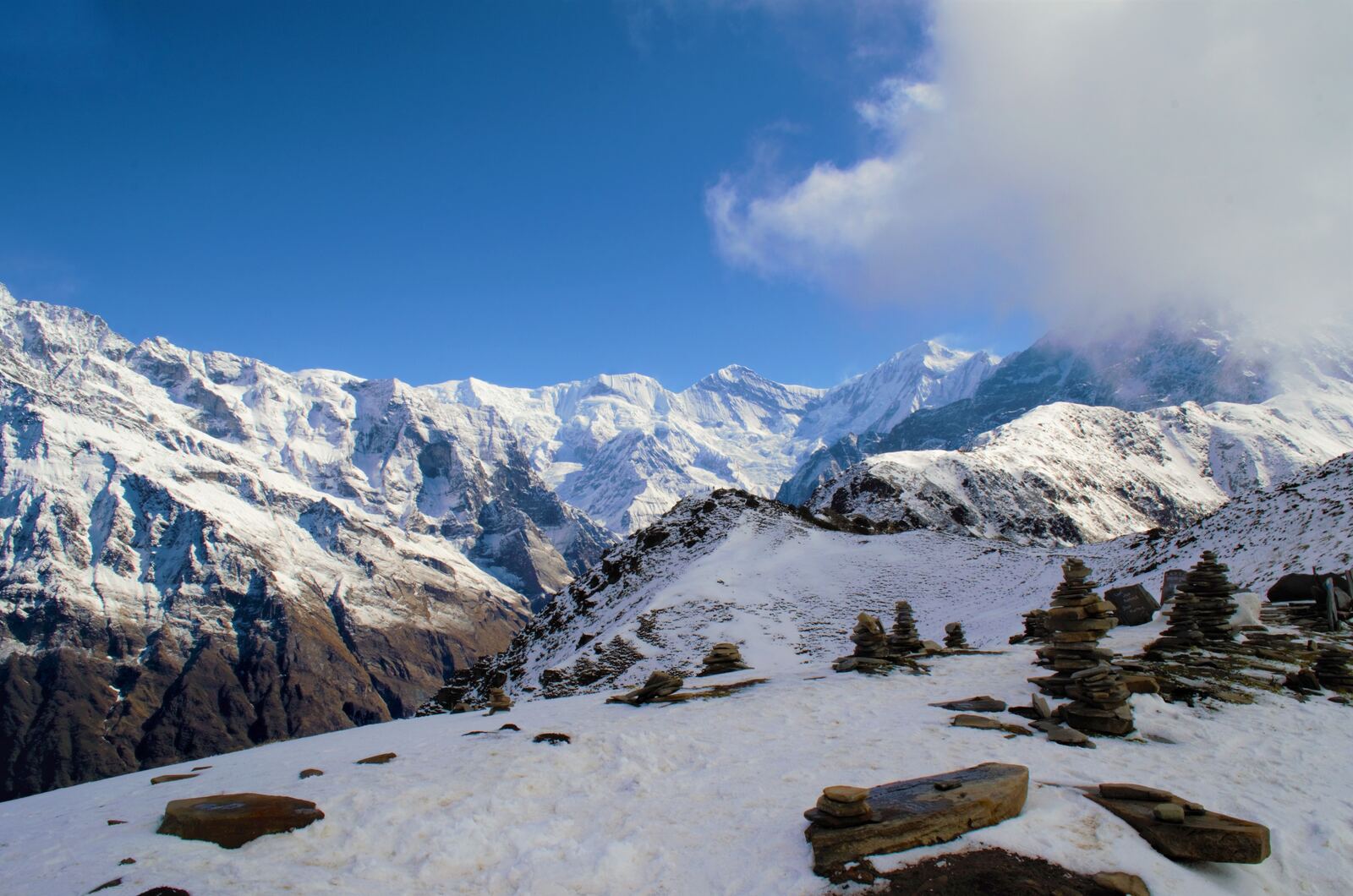
Langtang Himal · 2,782 m
Phulchowki summit · NOV 2025
“clear sky, 14:45”
with Placeholder Guest F and friends, Spain
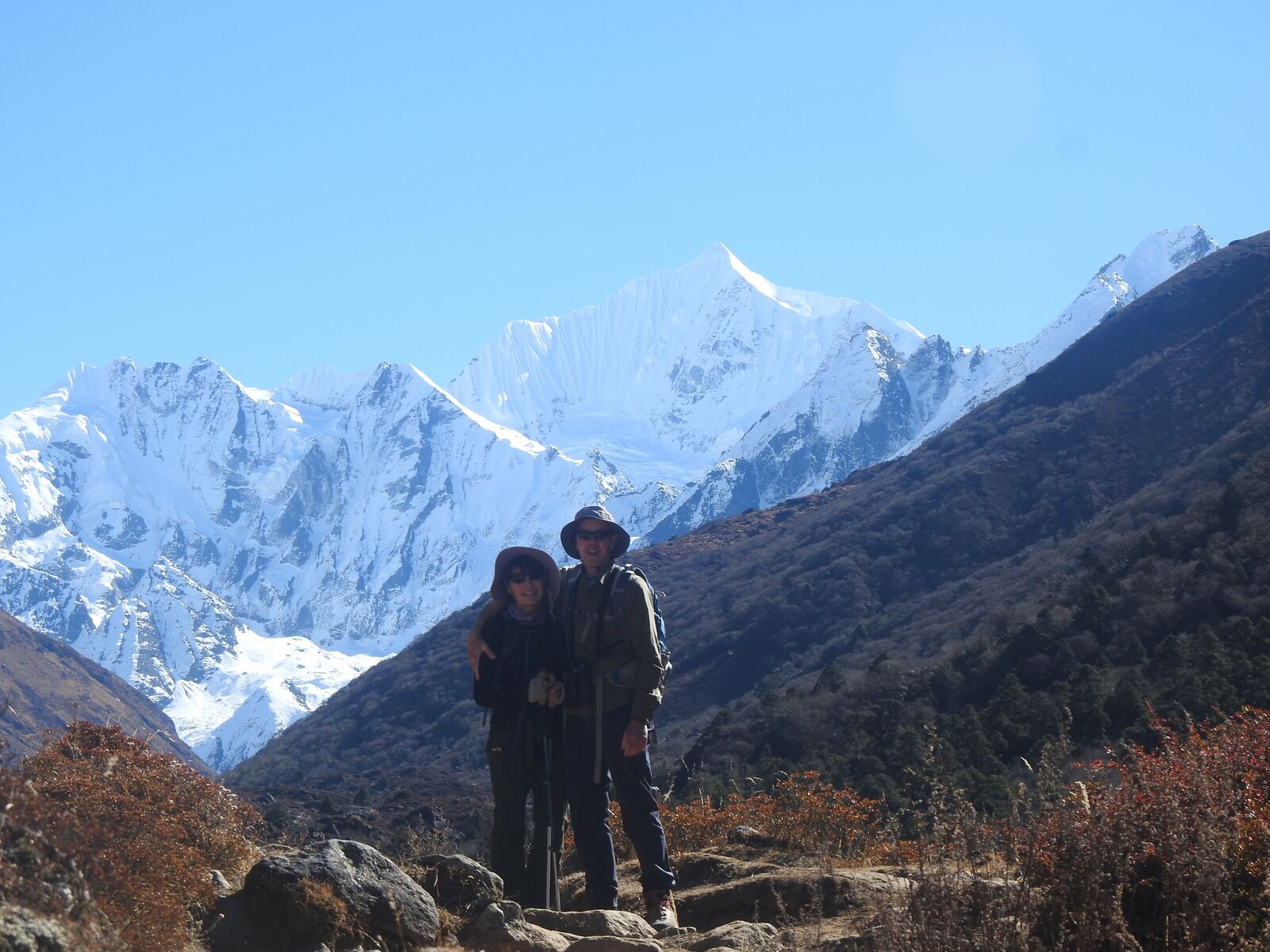
November is when the Kathmandu air is at its clearest, and the Langtang range stood out against the sky at the summit as if it were painted. A Himalayan Bluetail, blue-backed and orange-flanked, was working the undergrowth by the path, and my guests had their cameras trained on it from the moment we arrived.
While we looked at the mountains, two Himalayan Griffons rose on a thermal right past the summit. One came so close we could hear the air in its feathers. I told them: remember this, this is Kathmandu's own mountain, and it is only an hour from the city.
Seen that day: Himalayan Bluetail, Himalayan Griffon, Spotted Nutcracker, Black Eagle
“We were lucky with a clear November day. A Himalayan Bluetail showed beautifully near the top, Himalayan Griffons soared past the summit, and Krishna pointed out the Langtang range on the horizon. Gentle, informative and a lot of fun. Placeholder review.”
Placeholder Guest F, Spain - Trip report, March 2026Forktails, sunbirds and a picnic by the stream
A day on this trip
I pick you up in Kathmandu around half past five, and we bird from dawn up through the forest to the summit, have a picnic lunch by the temple stream and spend the afternoon at Godawari. Two or three hours of easy walking in all, and you're back in the city by five.
The day, stop by stop
Lower Phulchowki Forest1,750 m · Kalij Pheasant, Spiny Babbler
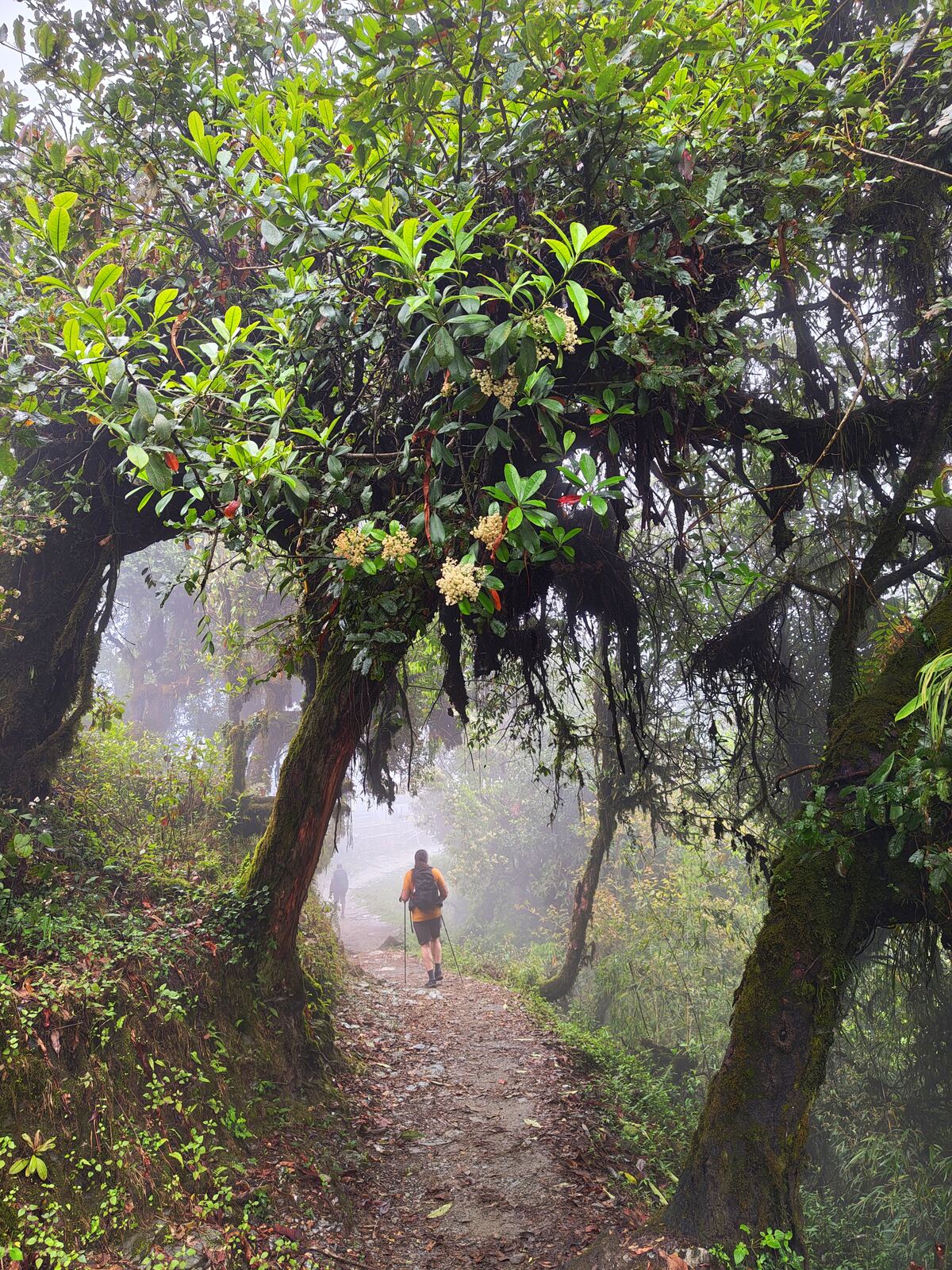
We depart Kathmandu before sunrise (around 5:30–6:00 AM) to reach the birding sites while activity is highest, with a packed breakfast and hot tea or coffee provided en route. Then we drive up the forested slopes of Phulchowki, stopping at productive spots along the road. Look for laughingthrushes, minivets, yuhinas, niltavas and, with luck, the elusive Spiny Babbler, Nepal's only endemic bird.
Birds 29: Rufous Sibia, Whiskered Yuhina, Blue-winged Minla, White-throated Laughingthrush, Great Barbet, Black Bulbul, Chestnut-crowned Laughingthrush, Striated Laughingthrush, Rufous-chinned Laughingthrush, Rufous-winged Fulvetta, Nepal Fulvetta, Yellow-billed Blue Magpie, Green-tailed Sunbird, Black-throated Sunbird, Mountain Bulbul, Greater Yellownape, Large Niltava, Slaty-blue Flycatcher, Long-tailed Minivet, Kalij Pheasant, Himalayan Cutia, Mrs. Gould's Sunbird, Golden-throated Barbet, Speckled Wood-Pigeon, Ashy Wood-Pigeon, Mountain Hawk-Eagle, Besra, Grey-winged Blackbird, Spiny Babbler
Mammals 1: Assamese Macaque
Butterflies 1: Northern Jungle Queen
Plants 1: Tree Rhododendron
Upper Oak–Rhododendron Forest2,500 m · Hill Partridge, Scarlet Minivet
Higher up the road, the forest turns cool and tall, with rhododendrons, orchids on the oak limbs and the chance of a Spotted Laughingthrush or Great Parrotbill in the bamboo. Flowers draw sunbirds in the spring.
Birds 21: Rufous-vented Tit, Grey-crested Tit, Spot-winged Tit, Stripe-throated Yuhina, Bar-tailed Treecreeper, Spotted Laughingthrush, Hoary-throated Barwing, Chestnut-tailed Minla, Rufous-gorgeted Flycatcher, Yellow-browed Tit, Spotted Nutcracker, Fire-tailed Sunbird, Mrs. Gould's Sunbird, Scarlet Minivet, Hill Partridge, Great Parrotbill, Koklass Pheasant, Himalayan Cutia, Golden-breasted Fulvetta, Blue-fronted Redstart, Collared Grosbeak
Mammals 2: Barking Deer, Yellow-throated Marten
Plants 3: Tree Rhododendron, Bearded Rhododendron, Necklace Orchid
Phulchowki Summit2,782 m · Black Eagle, Himalayan Bluetail
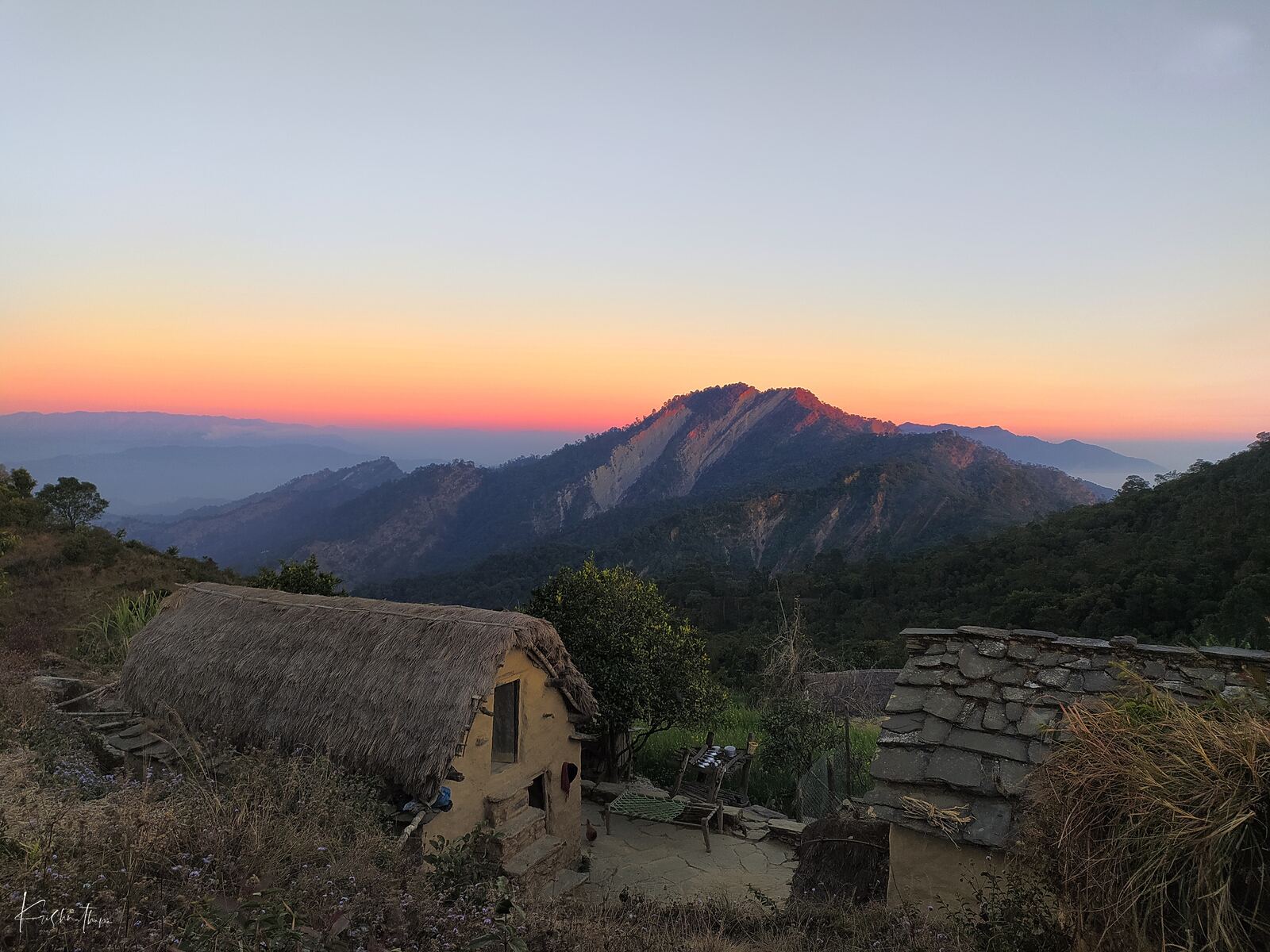
By mid-morning we reach the summit at 2,782 m, with a wide view across the Kathmandu Valley and, on a clear day, the white wall of the Langtang and Jugal Himal. Raptors start to circle in the thermals as the day warms.
Birds 10: Spotted Nutcracker (seen with guests on this trip), White-throated Laughingthrush, Himalayan Bluetail (seen with guests on this trip), Black Eagle (seen with guests on this trip), Himalayan Griffon (seen with guests on this trip), Egyptian Vulture, Mountain Hawk-Eagle, Rufous-vented Tit, Blue-fronted Redstart, Oriental Honey-buzzard
Plants 1: Bearded Rhododendron
Phulchowki Mai Temple2,100 m · Rufous-bellied Niltava, Spotted Forktail
On the way down we stop for a packed lunch at the little temple, where a rushing stream cuts through the forest. Forktails and redstarts bob on the wet rocks, while niltavas and thrushes feed in the shady clearing.
Birds 20: Spotted Forktail (seen with guests on this trip), White-capped Redstart (seen with guests on this trip), Plumbeous Water Redstart, Rufous-bellied Niltava (seen with guests on this trip), Yellow-bellied Fantail, Grey-hooded Warbler, Little Forktail (seen with guests on this trip), Large Niltava (seen with guests on this trip), Chestnut-bellied Rock-Thrush, Grey-winged Blackbird, Long-tailed Minivet, Whiskered Yuhina, Green-tailed Sunbird, Blue Whistling-Thrush, Collared Owlet, Red-headed Trogon, Himalayan Cutia, Rufous-gorgeted Flycatcher, Golden Bush-Robin, Himalayan Bluetail
Mammals 1: Yellow-throated Marten
National Botanical Garden, Godawari1,500 m · Himalayan Bulbul, Eurasian Jay
After lunch we continue to Godawari Botanical Garden, where mixed forest and open lawns attract flycatchers, barbets, woodpeckers and sunbirds. We wrap up the checklist over tea before dropping you back at your hotel by early evening (around 5:00–6:00 PM).
Birds 28: Himalayan Bulbul, Black Bulbul, Red-vented Bulbul, Great Barbet, Oriental White-eye, Black-throated Bushtit, Grey-hooded Warbler, Green-backed Tit, Red-billed Blue Magpie, Scarlet Minivet, Verditer Flycatcher, Rufous-bellied Niltava, Little Pied Flycatcher, Blue Whistling-Thrush, Streaked Laughingthrush, Eurasian Jay, Oriental Magpie-Robin, Fulvous-breasted Woodpecker, Grey-capped Pygmy Woodpecker, Blue-throated Barbet, Kalij Pheasant, Spotted Forktail, Grey-chinned Minivet, Common Kingfisher, Spiny Babbler, Ultramarine Flycatcher, Himalayan Bluetail, Hodgson's Redstart
Butterflies 2: Krishna Peacock, Common Mormon
Plants 1: Himalayan Daphne
Good to know
- Guiding
- Krishna leads the whole trip
- Difficulty
- Easy
- Highest point
- 2,782 m, Phulchowki Summit
- Best months
- February to April and October to November
- Region
- Kathmandu Valley, Phulchowki and Godawari
What's included
Included
- Private transportation
- Expert birding guide
- Breakfast, packed lunch, and refreshments
- Entrance fees to Phulchowki/Godawari
Not included
- Personal expenses and tips
- Binoculars (available for rent)