with Sophie & Mark, Australia
Gharials, a tiger at the reeds and a bee-eater by the lodge
Four safari days in Bardiya in February: a tiger at the reeds at dusk, gharials basking on a Karnali sandbar, a one-horned rhino in the floodplain and a green bee-eater at the lodge.
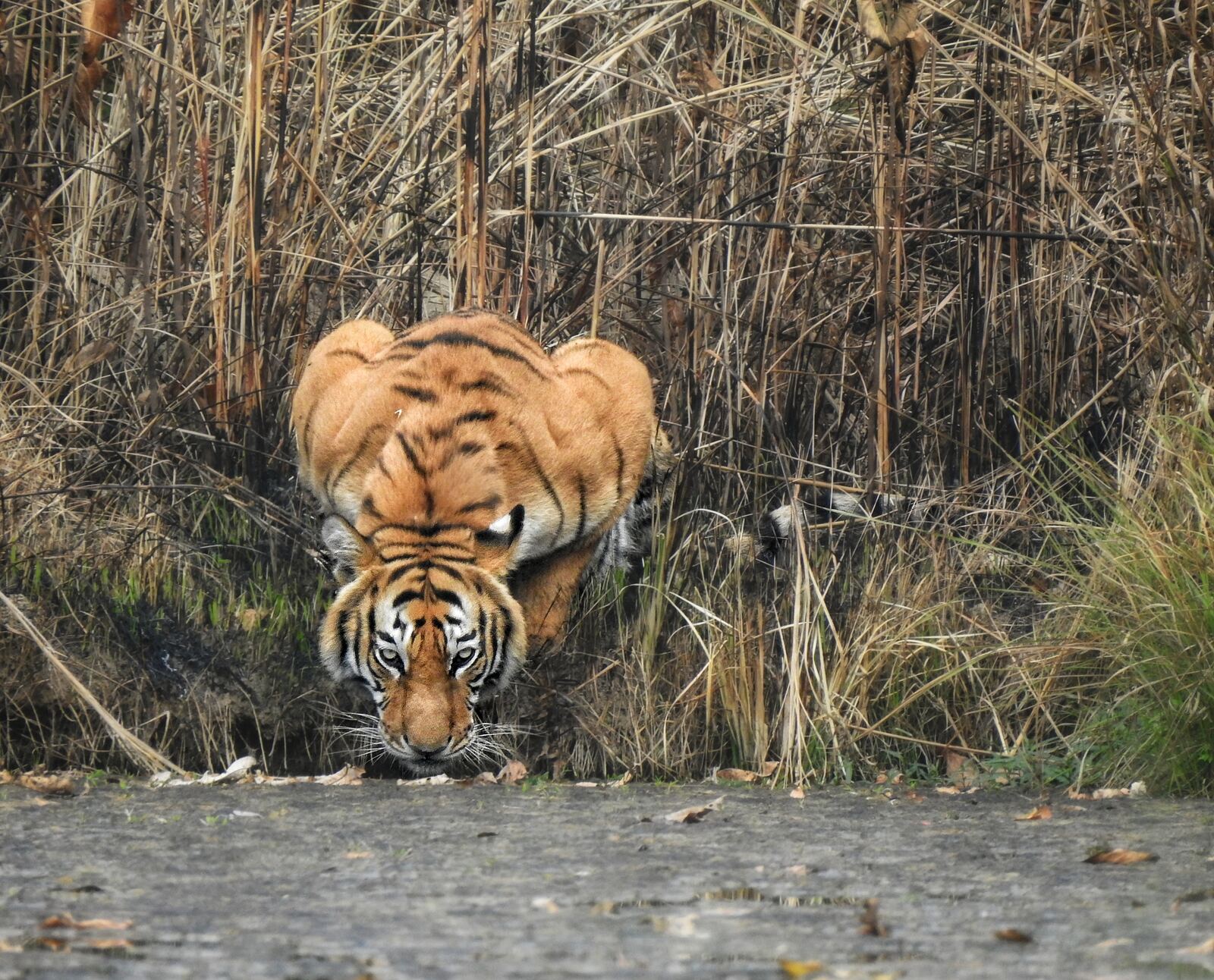
Bengal Tiger
Panthera tigris
Bardiya Grasslands · 180 m · 12 FEB 2026
“drinking at the reed edge, 17:20”
Sophie and Mark came in through Kathmandu, took the short flight to Nepalgunj, and by lunchtime we were at the lodge in Thakurdwara with the bags unpacked and the cameras out. The lodge garden is full of birds. Before they had finished their tea, a Green Bee-eater dropped onto a wire over the lawn with a bee in its beak.
In the afternoon we walked the edge of the park to find the river paths and the places where the light falls best at dawn. I always do that on the first day. It means nobody has to think about maps the next morning, only about animals.
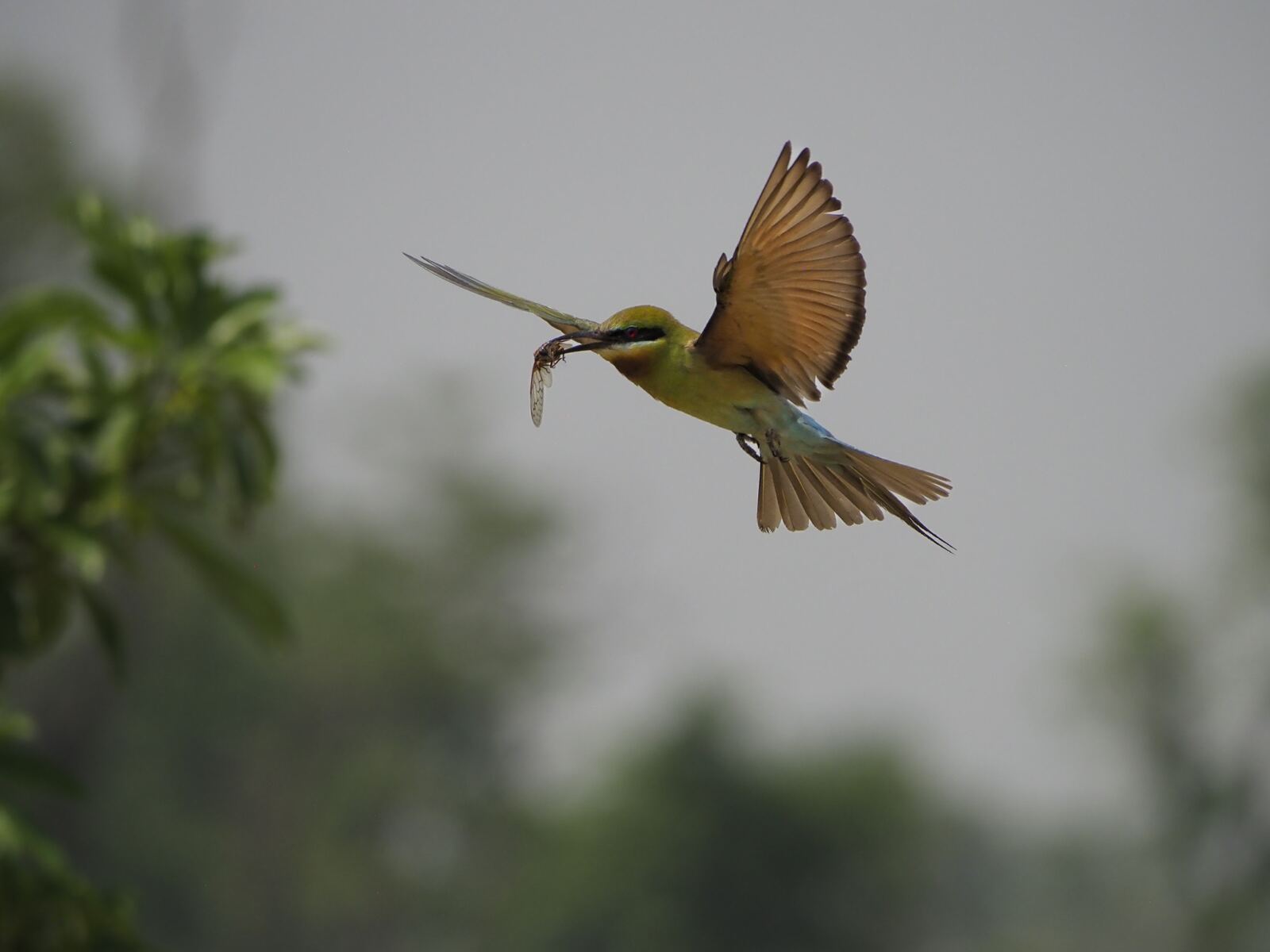
Green Bee-eater
Merops orientalis
Thakurdwara, Bardiya · 170 m · 7 FEB 2026
“catching a bee by the lodge, 16:20”
The bee-eaters came back to the same wire every afternoon. Easy to photograph, hard to keep up with.
On the first morning in the grasslands we were in the jeep before six. The grass was still wet, and spotted deer and swamp deer stood in the mist while a peafowl called from somewhere in the trees. We stopped often, switched the engine off and waited. Mark said it was the first time in years he had waited for something without checking his phone.
The river days are the calm ones. We floated the Geruwa channel of the Karnali at first light, with the sandbars still in shade. A gharial lay on one of them with its long snout towards the water, terns worked the shallows, and two Ibisbills walked the shingle bars, a bird I only see a few times each winter.
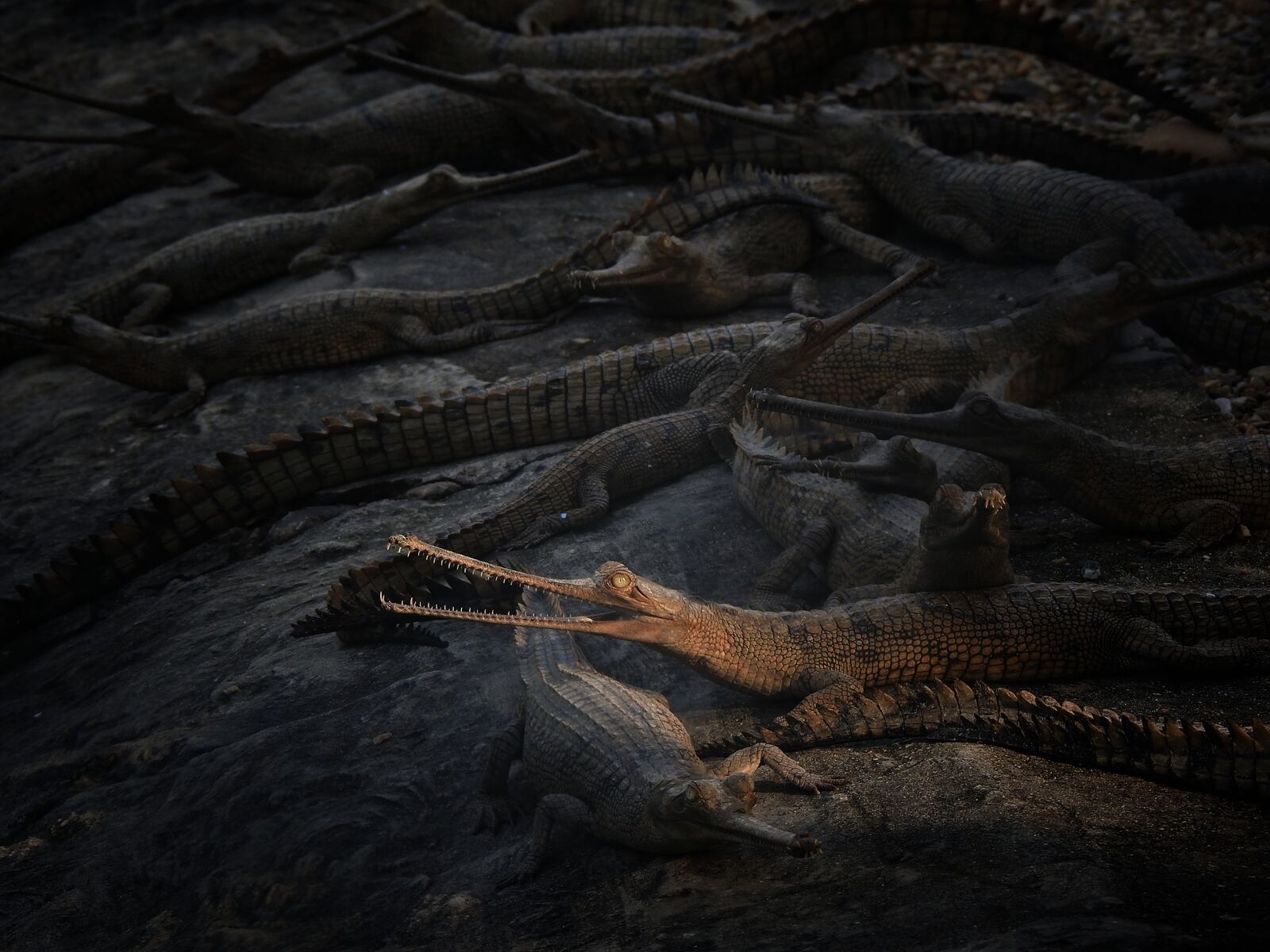
Gharial
Gavialis gangeticus
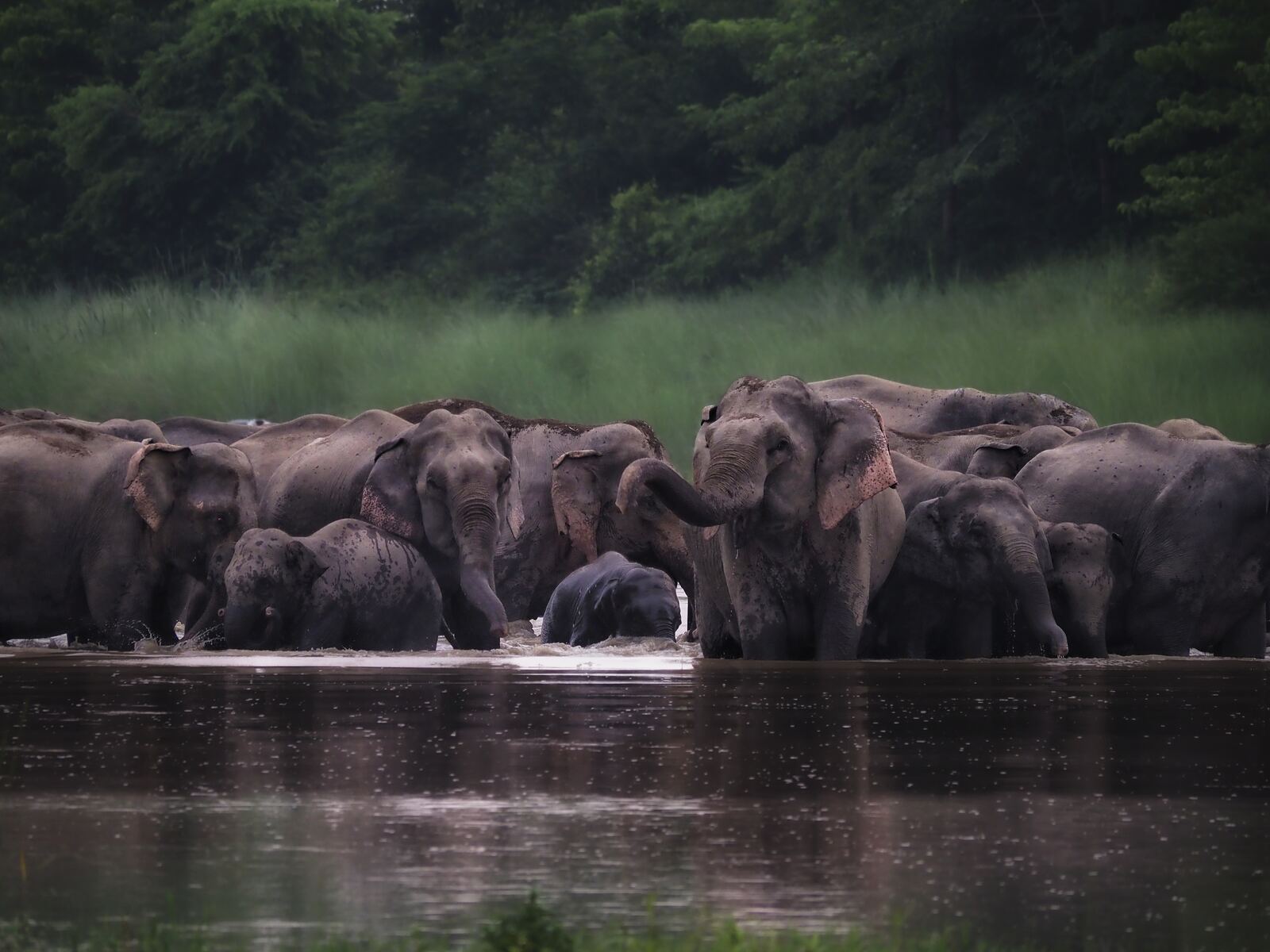
Asian Elephant
Elephas maximus
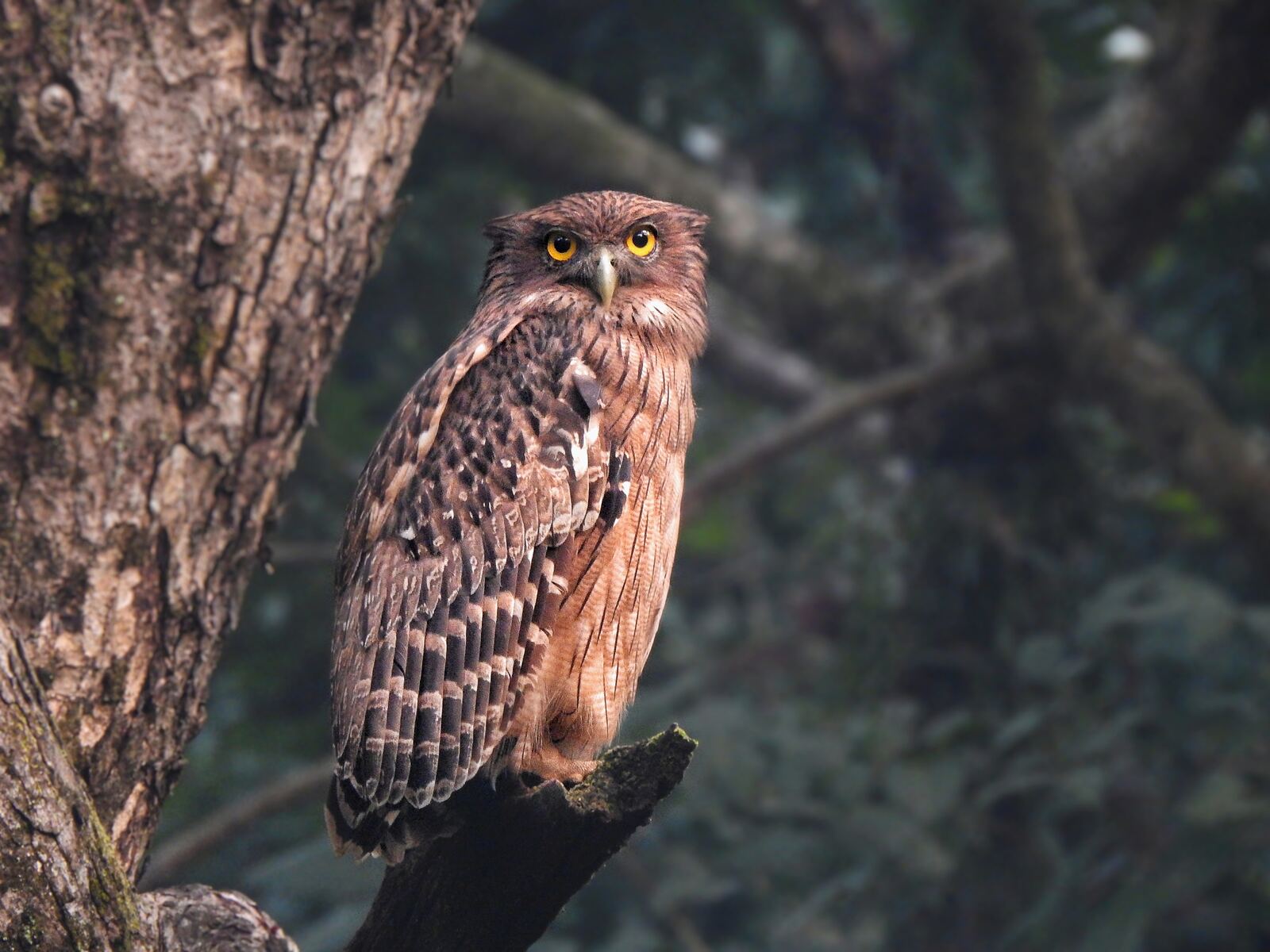
Brown Fish-Owl
Ketupa zeylonensis
The sal forest days are slower. We drove deep into the trees and waited at the waterholes through the middle of the day, when only the woodpeckers and hornbills are moving. A family of Great Slaty Woodpeckers worked a sal trunk in front of us for twenty minutes, and two Red-headed Vultures sat on a dead tree over the clearing.
In the floodplain a one-horned rhino grazed in shallow water beside the tall grass. On our last evening drive a tiger came out of the grass onto the track and stopped to look back at us. Sophie did not take a single photo for a while. She told me afterwards that was the best part.
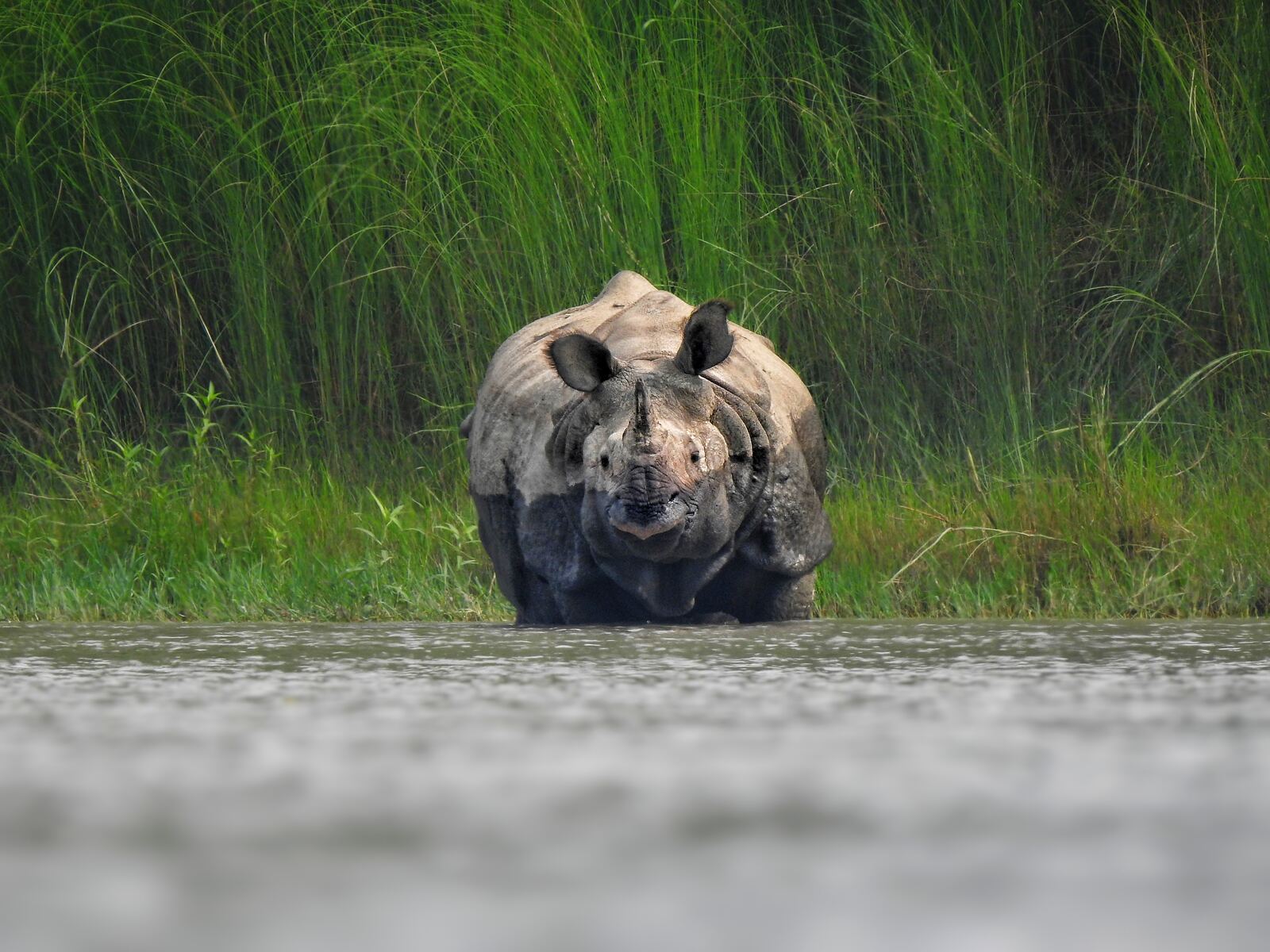
Greater One-horned Rhinoceros
Rhinoceros unicornis
Karnali floodplain, Bardiya · 160 m · 11 FEB 2026
“grazing in shallow water, 07:40”
The rhinos stayed in the water while the sun came up over the grass.
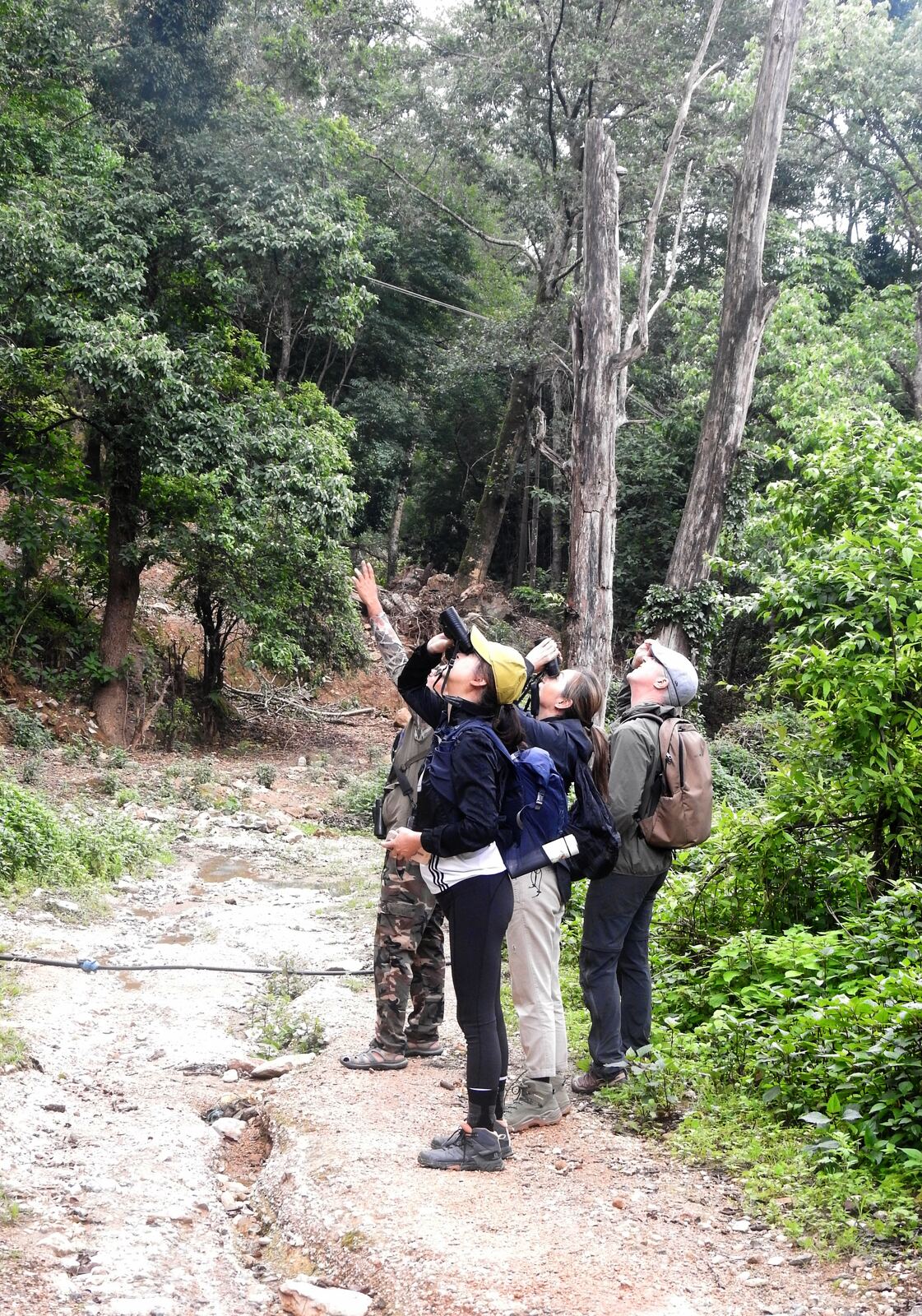
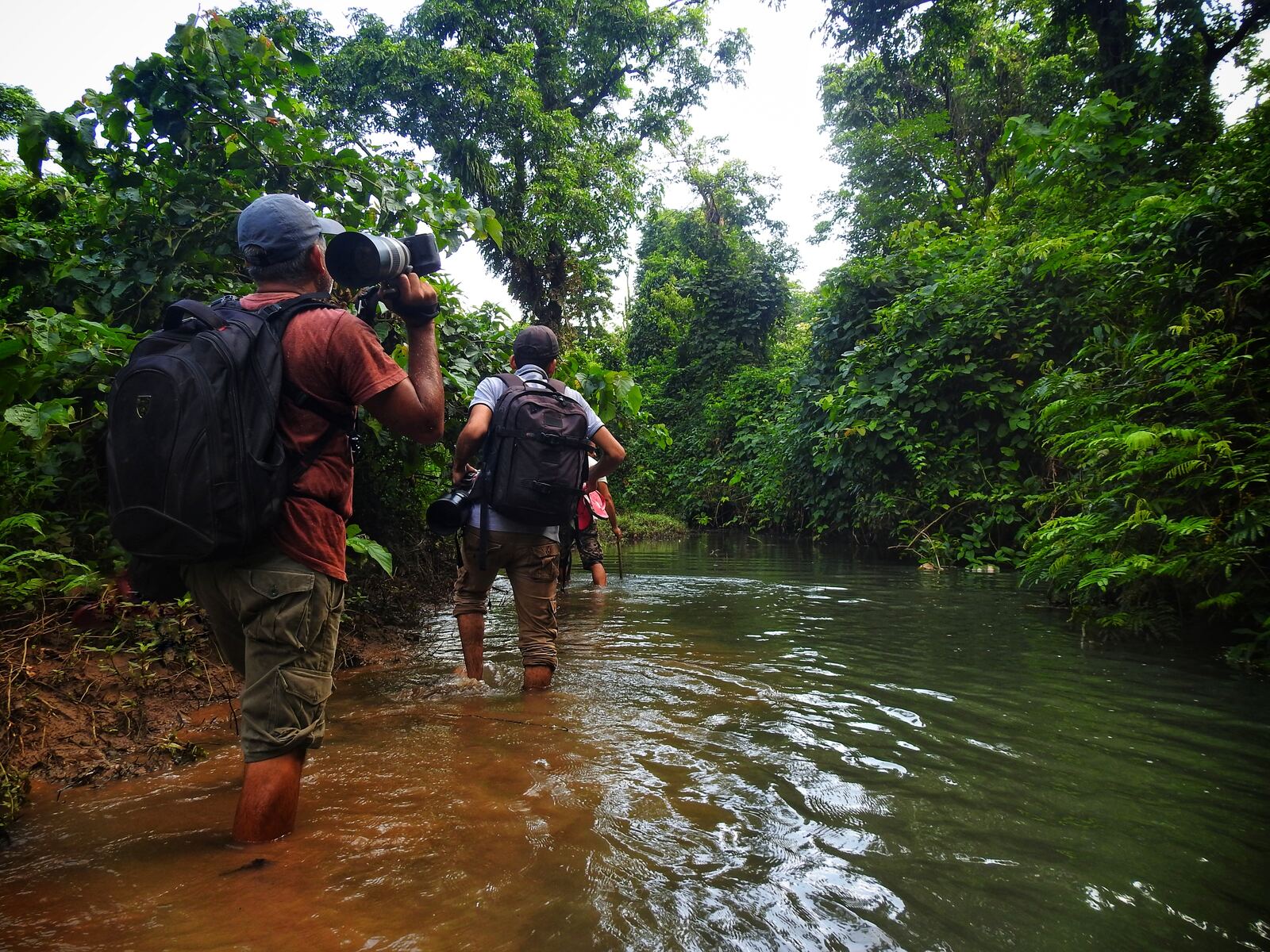
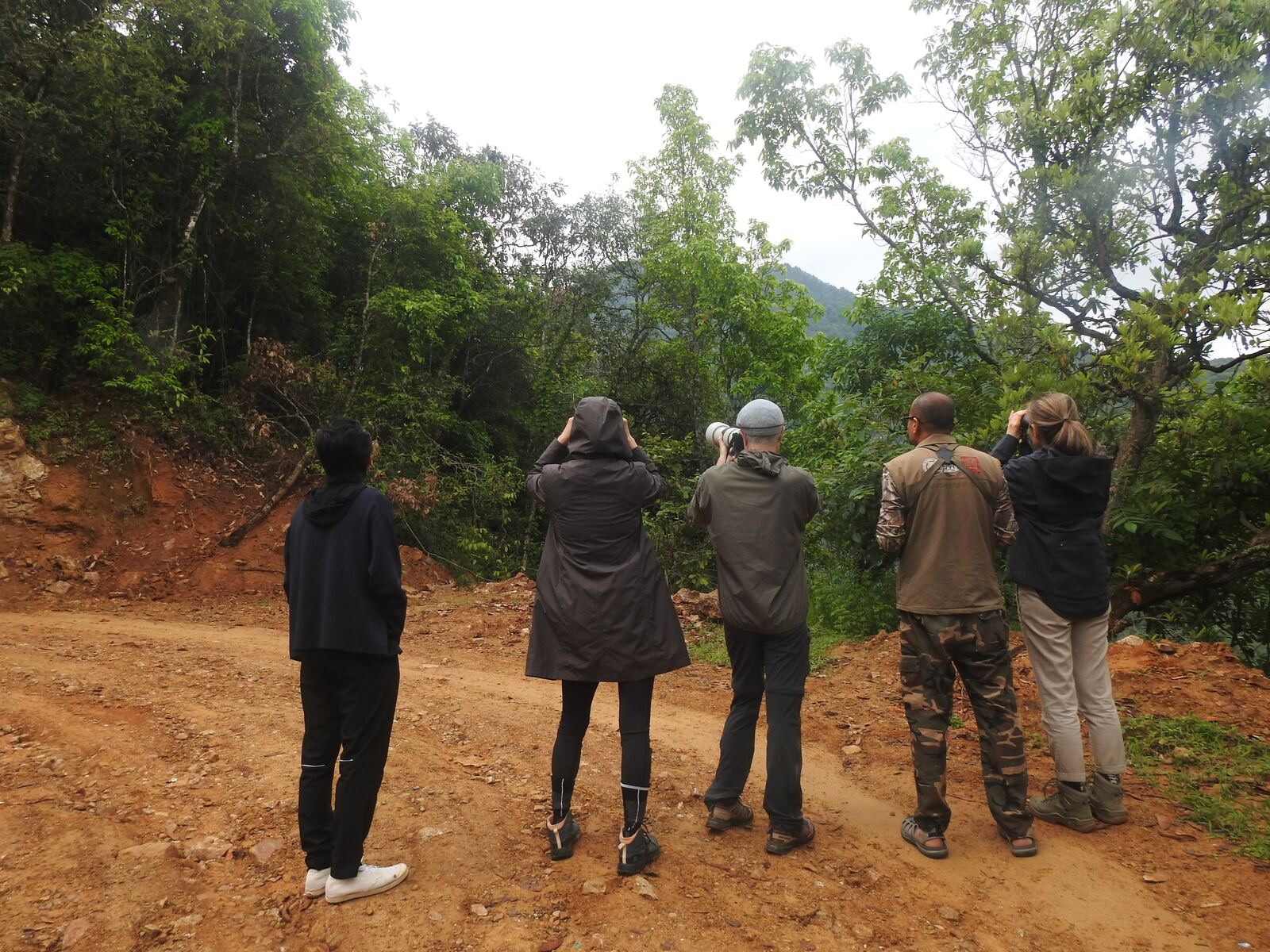
The group
1 / 3
What we saw 29
Birds 21
Indian Grey Hornbill
Ocyceros birostris
Green Bee-eater
Merops orientalis
Spotted Owlet
Athene brama
Indian Roller
Coracias benghalensis
Lineated Barbet
Psilopogon lineatus
Indian Pond-Heron
Ardeola grayii
Cattle Egret
Bubulcus ibis
Black Drongo
Dicrurus macrocercus
Asian Pied Starling
Gracupica contra
Red Junglefowl
Gallus gallus
Indian Peafowl
Pavo cristatus
Jungle Babbler
Argya striata
Great Slaty Woodpecker
Mulleripicus pulverulentus
Oriental Pied Hornbill
Anthracoceros albirostris
Red-headed Vulture
Sarcogyps calvus
River Tern
Sterna aurantia
White-throated Kingfisher
Halcyon smyrnensis
Ruddy Shelduck
Tadorna ferruginea
Common Sandpiper
Actitis hypoleucos
Ibisbill
Ibidorhyncha struthersii
Brown Fish-Owl
Ketupa zeylonensis
Mammals 6
Bengal Tiger
Panthera tigris
Asian Elephant
Elephas maximus
Greater One-horned Rhinoceros
Rhinoceros unicornis
Spotted Deer
Axis axis
Swamp Deer
Rucervus duvaucelii
Hog Deer
Axis porcinus
Reptiles 1
Gharial
Gavialis gangeticus
Plants 1
Silk-cotton Tree
Bombax ceiba